


 02/06/2025
The Rise of Predictive Maintenance in Smart Manufacturing
Predictive maintenance is transforming modern manufacturing by enabling organizations to detect equipment failures before they occur. By combining IoT sensors, machine learning, and real-time analytics, this approach helps reduce downtime, extend equipment lifespan, and optimize resource usage.
Unplanned equipment failures cost the world's 500 largest companies up to $1.4 trillion annually. These losses arise not only from halted production but also from increased energy waste, repair costs, and decreased client satisfaction.
According to McKinsey, implementing advanced analytics and digital tools in maintenance can reduce overall costs by 15–30%, extend asset life by up to 20%, and increase overall plant profitability by 4–10%. This makes predictive maintenance one of the most promising applications of Industry 4.0 technologies in manufacturing today.
Despite the clear benefits, a McKinsey study also highlights that many organizations still rely on outdated maintenance models like run-to-failure or time-based servicing. This results in inefficiencies, especially in asset-heavy industries such as energy, utilities, and manufacturing.
Another McKinsey report emphasizes that companies that have embraced manufacturing analytics have improved productivity by as much as 20–25%, underscoring how data-driven maintenance strategies can lead to significant operational gains.
Meanwhile, Forbes notes that downtime accounts for nearly a quarter of all manufacturing costs, making it the “silent killer” of productivity, and AI-powered predictive maintenance is one of the few effective strategies to fight it.
How TMA Integrates Predictive Maintenance in Its Solutions
TMA Solutions, a trusted software development partner in smart manufacturing, has implemented predictive maintenance across multiple projects by combining IoT sensors, machine health data, and AI algorithms. These solutions are designed to help manufacturers move from reactive to predictive workflows with ease and confidence.
TMA CMMS: Predictive Engine for Maintenance Operations
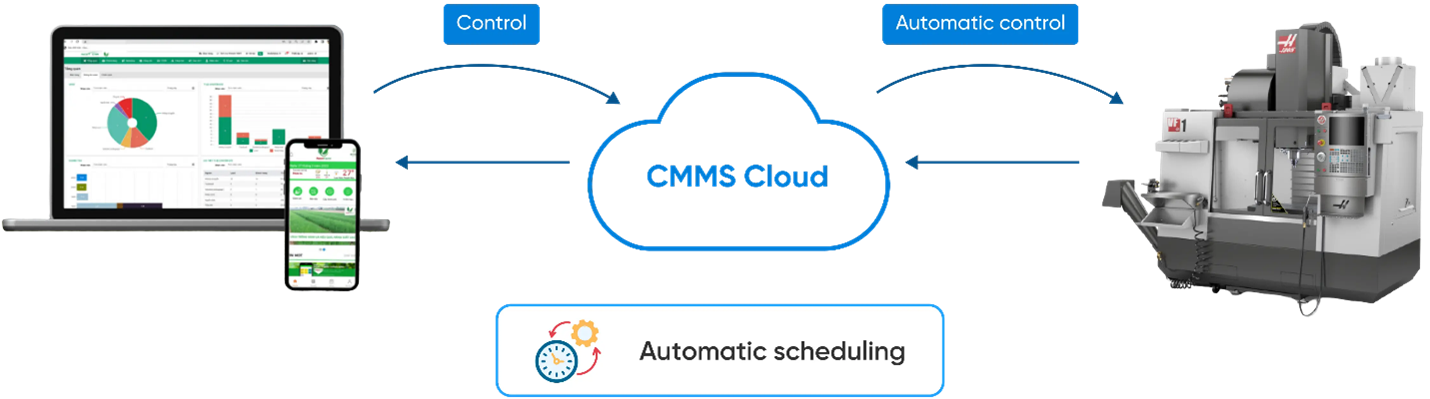
TMA’s Computerized Maintenance Management System (CMMS) automates and predicts equipment failures through:
- Sensor-based Monitoring: Tracks temperature, vibration, energy use, and other operational parameters in real time.
- AI-powered Risk Detection: Learns from historical breakdowns and usage data to detect abnormal behavior.
- Proactive Scheduling: Automatically creates work orders based on sensor thresholds or anomaly triggers.
- Cloud-based Documentation: Keeps all manuals, repair logs, and checklists available for technicians via mobile app or web portal.
TMA CMMS could be deployed in industrial zones, energy plants, and manufacturing hubs, where it has reduced unscheduled downtime and maintenance delays.
Machine Monitoring System (MMS): Live Operational Intelligence
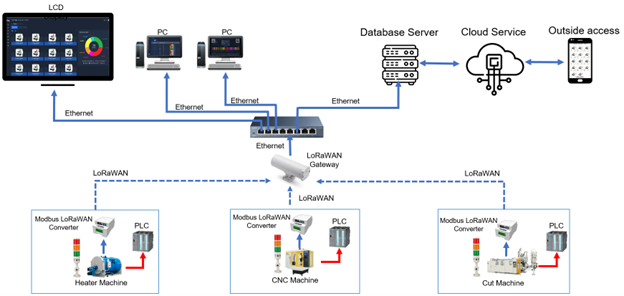
The MMS complements CMMS by offering real-time production insights:
- Downtime Counting: Calculates and categorizes every instance of equipment stoppage.
- Efficiency Analytics: Visualizes OEE (Overall Equipment Effectiveness) and compares it across shifts, days, or machines.
- Remote Operation: Enables factory teams to reconfigure machine settings based on performance data.
- Edge + Cloud Integration: Collects data from Modbus/LoRaWAN devices and syncs with cloud dashboards for centralized control.
Together, CMMS and MMS form a closed-loop feedback system: issues detected by MMS trigger maintenance tasks in CMMS, and completed tasks update the health status in real time.
Why TMA? The Competitive Advantage
What sets TMA’s predictive maintenance approach apart?
- Customizable to Each Industry: Whether it’s HVAC in factories or power management in data centers, TMA tunes the solution to exact use cases.
- Scalable Architecture: Built on cloud-native microservices with AWS, RabbitMQ, and PostgreSQL for multi-device management at scale.
- AI-Driven Insights: AI models trained on historical breakdowns to detect subtle performance shifts.
- Business-Ready Dashboards: Real-time charts, alerts, and reports accessible on any browser or mobile device.
- Secure & Stable: Data encrypted end-to-end; compliant with industrial security standards.
Conclusion: The Future Is Predictive
In today’s hyper-competitive manufacturing landscape, unplanned downtime is no longer acceptable. Predictive maintenance offers a practical and data-driven solution to maintain asset productivity, optimize resource use, and minimize costly interruptions.
With TMA’s proven CMMS and MMS platforms, enterprises can finally bridge the gap between operations and analytics. By combining IoT, AI, and domain expertise, TMA enables manufacturers to operate not just reactively, but intelligently and proactively.

Table Of Content
Start your project today!
Share:


