


 19/06/2025
Understanding SIEM in Cybersecurity
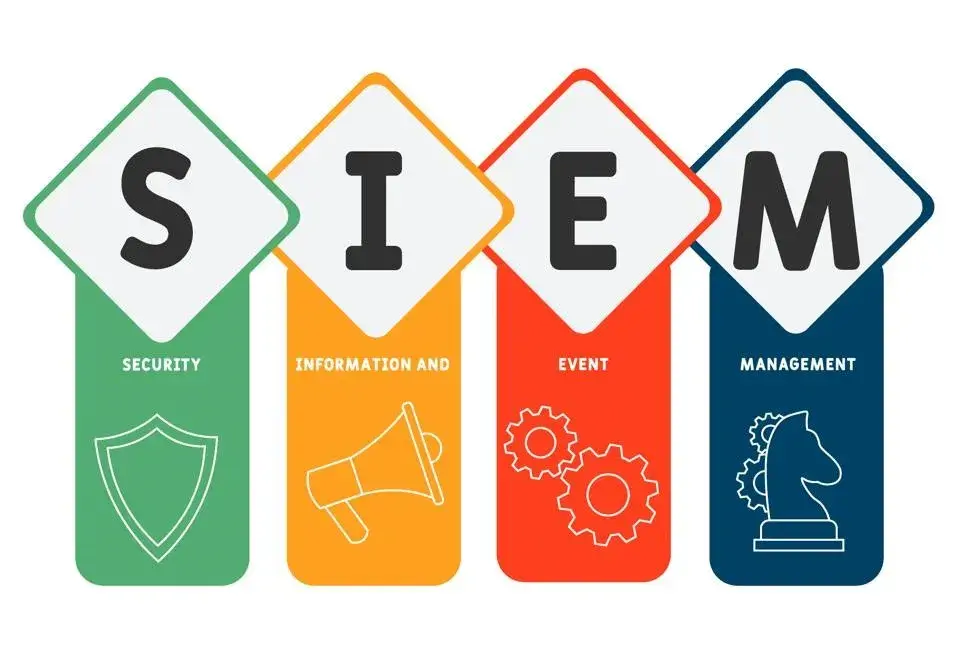
SIEM (stands for Security Information and Event Management) is the technology that underpins modern SOCs by collecting, aggregating, and analyzing security events across an organization. Gartner defines SIEM as systems that “support threat detection, compliance, and security incident management” by gathering logs from networks, applications, endpoints, and more.
In practice, a SIEM acts as the SOC’s nerve center: it centralizes alerts from firewalls, servers, IDS/IPS, etc., and uses correlation rules to flag suspicious patterns. As Wikipedia notes, SIEM tools are “central to security operations centers (SOCs)” for “detecting, investigating, and responding to security incidents”. Traditional SIEMs focus on logging and compliance – e.g., generating audit reports for regulations like HIPAA or PCI DSS – while using fixed-rule engines to catch known threats. They give analysts a single pane of view of all security logs so that anomalies (like dozens of failed logins or unusual data flows) don’t go unnoticed.
The AI Revolution
AI and machine learning are now transforming SIEM from a passive logger into an adaptive threat-hunting platform. Instead of relying solely on static rules, AI-powered SIEMs use statistical and ML models to learn normal system behavior and spot subtle deviations. McKinsey reports that modern AI systems “analyze vast amounts of data in real time, providing context across silos, identifying anomalies and potential breaches”. In concrete terms, an AI-enhanced SIEM might detect an unusual login pattern or a novel malware signature that a rule-based system might miss.
These intelligent SIEMs also ingest external threat intelligence and behavioral analytics. According to industry sources, the SIEM concept has evolved to include threat feeds and behavior analytics so it can catch zero-day and polymorphic attacks3. For example, by automatically cross-referencing an alert with up-to-date lists of malicious IPs or file hashes, they can learn a user’s typical “heartbeat” so that truly unusual activity (e.g., logging in at 3 AM from an unfamiliar country) is surfaced.
All these drive faster, smarter alerts. Instead of drowning analysts in noise, AI filters and prioritizes events: common activities are downranked and only high-risk anomalies trigger urgent alerts. Over time, the system tunes itself by reinforcing patterns labeled as benign or malicious, greatly cutting false alarms.
What Is Agentic AI ?
“Agentic AI” refers to autonomous AI agents that can make decisions and take actions without direct human control. In simple terms, an agentic AI is a software “bot” or co-pilot that continually learns from data and can execute tasks on its own. As one definition explains, agentic AI “focuses on autonomous systems that can make decisions and perform tasks without human intervention”. These agents may use techniques like natural-language processing, machine learning, and especially reinforcement learning to adapt their behavior over time.
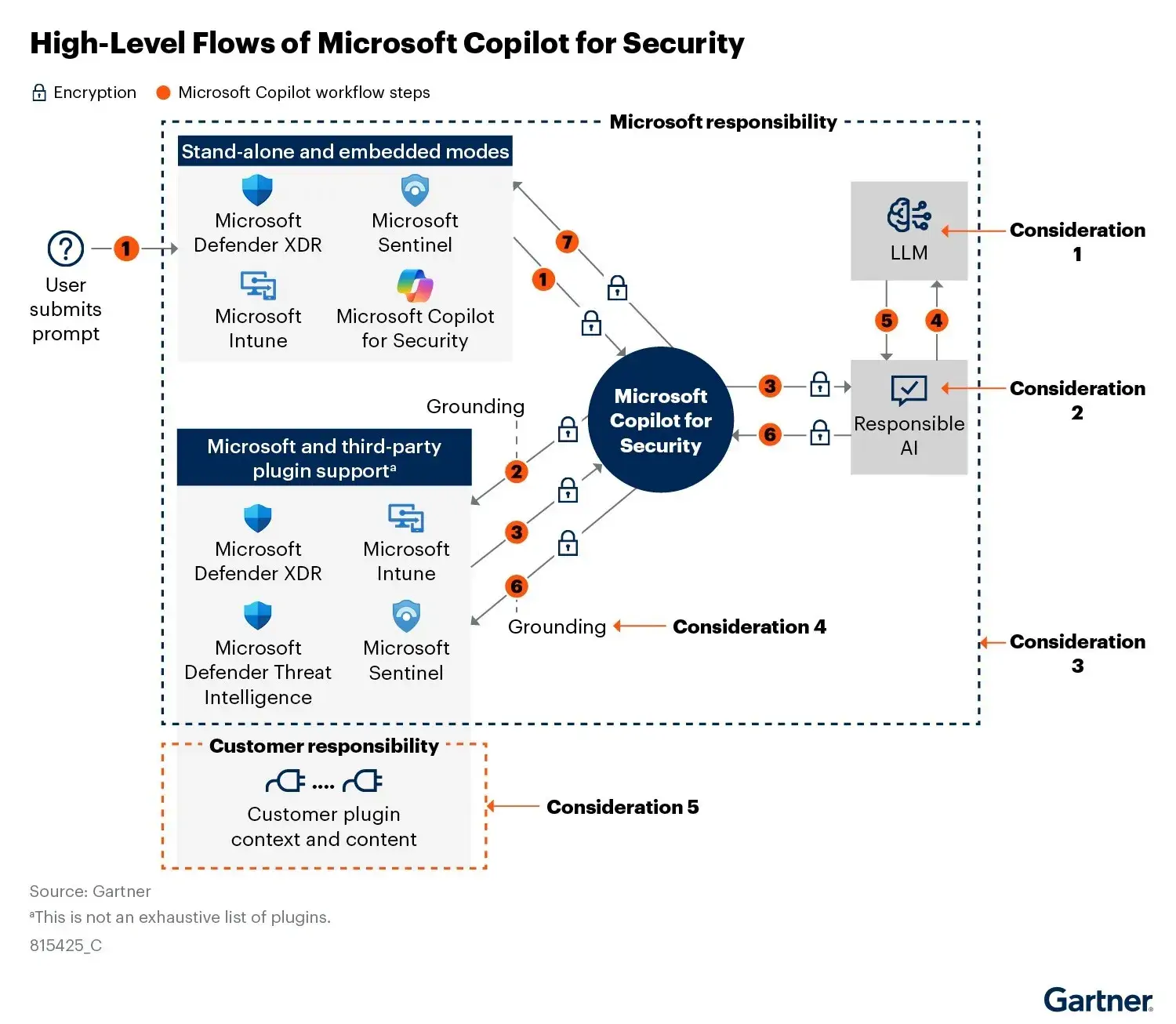
In the context of SecOps, agentic AI means giving the SOC autonomous assistants or “AI analysts” that support the human team. Rather than passively generating reports, these agents continuously monitor the SIEM and other security tools, triage alerts, and even initiate responses on their own. An industry analysis notes that agentic AI “helps SOCs automate decision-making, adapt to evolving threats, and streamline workflows, including alert triage and incident response”. In other words, an agentic AI can act on a SIEM alert: for example, it might investigate a suspected intrusion and automatically quarantine a server if it confirms malware. These AI agents become virtual team members who can work 24/7, sifting through alerts in seconds. Major security vendors are already embedding such agents into their products – for instance, Microsoft’s new Security Copilot includes specialized AI agents for tasks like phishing triage and vulnerability remediation.
AI-Powered SIEM and Agentic AI in Action
By combining an AI-enhanced SIEM with agentic AI, security teams can move from detection to autonomous response. For example, imagine the SIEM flags a sudden spike in outbound traffic from a server (an anomaly). An agentic AI copilot could immediately jump into action: it may correlate this alert with threat feeds, realize the traffic matches a known data-exfiltration signature, and then automatically isolate the affected server from the network to contain the breach. This all could happen minutes before a human analyst even sees an alert.
- Example – Automated Intrusion Response: In a hypothetical attack, the SIEM identifies lateral movement (e.g., unusual connections between internal hosts). An agentic AI “analyst” would triage the alert (cross-check user behavior, process history, threat intel) and then take action: for instance, it might disable the compromised user’s credentials or block the malicious process. VentureBeat reports that modern AI systems are already “capable of real-time remediation, automated policy enforcement and integrated triage across cloud, endpoint and network domains”, exactly as in this scenario. Gartner likewise envisions AI agents working semi-autonomously to “execute tasks such as alert triage, investigation, [and] response actions” alongside human analysts.
- Example – Phishing and Vulnerability Response: Many SOCs deal with routine tickets like phishing reports or patch updates. An AI-powered workflow could handle these, too. For instance, Microsoft’s Security Copilot includes AI agents that automatically triage phishing alerts and suggest blocks. In practice, if the SIEM logs a suspicious email link, the agentic AI can analyze the email, determine it’s a known phishing campaign, and then quarantine the message or update firewall rules without waiting for manual review. The same applies to patching: if a vulnerability is detected, the AI copilot might prioritize it and even initiate remediation scripts. These scenarios show how an AI SIEM (for detection) and an agentic AI (for action) work together end-to-end.
Benefits of an AI-Driven SecOps
Combining AI-enhanced SIEM with agentic AI offers tangible gains for security teams. Key benefits include:
- Faster Detection and Response: AI can slash the mean time to detect and respond. McKinsey reports that organizations use AI to dramatically reduce their “mean time to detect, respond, and recover” from breaches. In practice, teams adopting AI “copilots” see incident response times drop dramatically (often 20–30% faster) because the system flags issues early and helps automate investigation steps.
- Reduced False Positives: By learning context and baselines, AI greatly cuts alert noise. One analysis found that AI security “copilots” cut false positives by about 70%, since the AI filters out routine events and only surfaces truly risky anomalies. This means analysts spend far less time on benign alerts and more on genuine threats.
- Higher SOC Efficiency and Productivity: Automated agents free up human experts. For example, teams report saving over 40 hours per week of manual triage time when using AI copilots. Gartner predicts that by 2026, SOC efficiency could improve by ~40% simply by offloading routine work to AI. In one study, junior analysts with AI assistance achieved 43% higher triage accuracy7. In short, AI handles the grunt work (log sifting, rule-checking, basic triage) so humans can focus on complex, strategic decisions.
- Proactive Threat Hunting: Continuous learning means the SIEM never stops improving. The AI can spot novel attack patterns – for example, flagging stealthy threats like fileless malware or insider anomalies that static rules would miss. Over time, this leads to more proactive defense. The net effect is a more resilient SecOps posture: teams detect breaches earlier, respond faster, and free up time to hunt emerging threats.
Challenges and Considerations
Despite the promise, several challenges must be addressed:
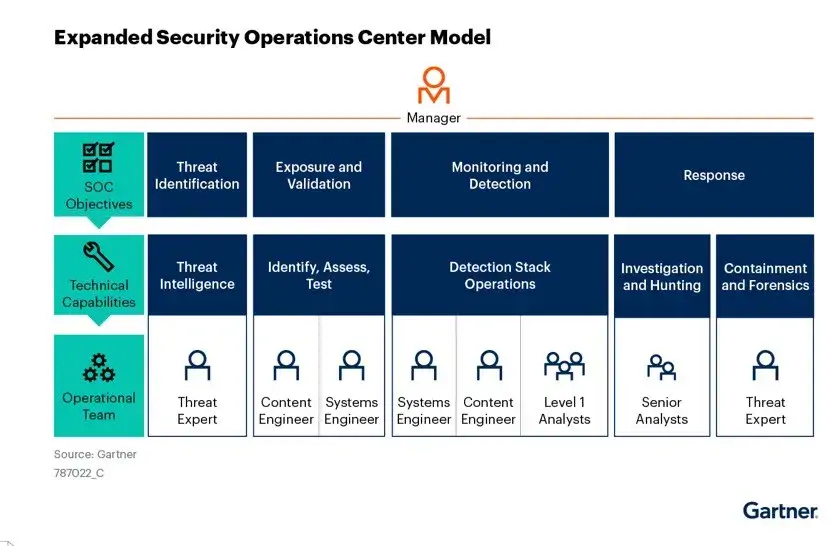
- Over-Reliance and Human Oversight: Automation creates risks if unchecked. Security experts warn that “over-reliance on AI” can create blind spots. An AI model might miss a crafty novel threat or generate a false sense of security, so human-in-the-loop workflows remain essential. Gartner explicitly cautions that there will “never be an autonomous SOC” – human analysts must guide, validate, and tune the AI. Finding the right balance between automation and human review is critical.
- Explainability and Trust: Many AI/ML models are “black boxes,” making it hard to understand why a decision was made. As one analysis notes, “many AI models function as a ‘black box,’ making it difficult for security teams to interpret and justify AI-driven decisions”. This lack of transparency can be problematic for compliance (e.g., auditing why an incident was flagged) and for analyst trust. SecOps teams must choose tools that offer as much explainability as possible (e.g., scoring or natural-language rationales) and maintain human review for critical decisions.
- Integration with Legacy Tools: SIEMs already sit at the center of a complex ecosystem. Adding new AI modules or agents requires seamless integration with existing EDR, firewall, identity, and orchestration systems. In practice, security data is often “siloed” across many tools, so organizations must carefully architect data flows. Ensuring that the AI-powered SIEM and agentic workflows can ingest logs from all sources (cloud, on-prem, endpoints) and trigger actions in existing platforms (e.g., ticketing systems, NDAs, firewalls) is a non-trivial integration challenge.
- Model Maintenance and Accuracy: AI models can “drift” over time if not retrained with fresh data, leading to rising false positives or missed detections. Bias in training data (e.g., neglecting certain regions or device types) can skew outcomes. Operationalizing AI in SecOps thus requires ongoing tuning, validation, and expertise, a shortage of which is common in cybersecurity. Teams must invest in the staff and processes to maintain these AI systems (data scientists, threat researchers) to sustain their benefits.
In summary, AI-powered SIEM and agentic AI agents promise faster, more efficient SecOps – but they also demand careful deployment. Organizations should pilot these tools incrementally, keep humans involved, and address concerns like explainability and integration from the start. When done right, the synergy of intelligent analytics and autonomous response can dramatically strengthen an organization’s security posture, catching threats earlier and freeing analysts to tackle the most complex challenges.
Conclusion
This brief research examines how AI-powered SIEM and agentic AI can transform SecOps workflows at TMA. It explores the shift from traditional, rule-based event management to machine-learning–driven threat detection, as well as the emerging role of autonomous AI agents that can triage alerts and execute remediation actions under human oversight. By assessing key capabilities – real-time anomaly detection, automated playbook execution, and explainability controls – this study will help TMA define a roadmap for piloting and measuring AI-driven security operations.

Table Of Content
Start your project today!
Share:


