


 24/05/2025
Understanding Penetration Testing
The Definition
Penetration testing is a controlled attack simulation with permission from the owner of the product/system that helps identify vulnerability and security issues in an application, network and system. You can fix or mitigate issues and implement defensive strategies to protect your critical systems and information, by locating vulnerabilities before the adversaries do.
The role of a pentester is to attempt to break into the target system to find vulnerabilities or security issues before attackers do. This distinctive approach uncovers vulnerabilities and threats, evaluates your agency's ability to detect and respond, and offers a benchmark for ongoing progress
As cybercrime increases, the importance of penetration testing is greater than ever.

Main Areas
- Web Application Penetration Testing: Focus on web applications, web servers and other web interface product. The popular standard for Web Application pentest is OWASP TOP 10. OWASP TOP 10 both provides a list of popular attack vector that aim at web products and a testing guide on how to proceed to find such issue.
- System Penetration Testing: Examine the security posture of an operating system weather it is safe or not, including but not limited to: finding misconfiguration and sensitive information in the system, finding escalation vector that allow malicious attacker to jump to another user or another system, expose potential backdoors and malware application.
- Network Penetration Testing: Find the potential vulnerabilities within the network infrastructure, including network devices like routers, switches, firewalls. This includes both internal and external network of an organization. Popular found issues are Man-in-the-Middle attack, Flooding attack, Spoofing attack.
- Mobile Application Penetration Testing: Aim to find security risks and vulnerabilities inside mobile applications and mobile devices, especially important in Bring Your Own Device (BYOD) environment.
- API Penetration Testing: Test the security implementation on API, check for weak authentication/authorization, code injection, and data leaks…
- IoT Penetration Testing: The goal is to simulate a real-world attack on IoT devices and systems, including hardware, firmware, communication protocols, and associated software applications. (IoT Security Challenges)
Why is Penetration Testing important in SDLC?
Many organizations forego or do not see the importance of Penetration Testing in the Software Development Cycle, and consequently, they have paid a heavy price for that oversight. With the fast and unprecedented development of Artificial Intelligent, hacking can be both simplified and increased greatly in scale. Malicious attackers will target an organization that does not take care of their product security, and their loss will not only be limited to resources and financial but also to their reputation.
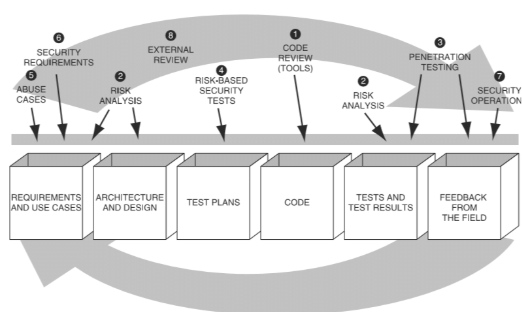
In this case, Penetration testing (pentest) is not just a tool for assessing software before releasing but also a strategic component that ensures robustness throughout the SDLC.
Identifying Vulnerabilities Early
In a modern secure development cycle, it is important to identify and eliminate or mitigate a security issue early rather than late.
Traditional development models like Waterfall often put security checks at the end, at the final audit. At that point, a serious and critical security issues also mean a re-development of an entire feature or even an entire product logic. Early detection of vulnerabilities through penetration testing allows development teams to address security flaws during the design, coding, or testing phases, which is significantly more cost-effective than fixing issues after release.
Compliance and Regulatory Requirements
Many clients and regions in the world require the product to meet certain requirements in cybersecurity and data protection. There are many standards for each industry, for example:
- HIPAA for healthcare (Healthcare Data Security)
- PCI-DSS for finance and e-commerce
- GDPR for organizations handling EU citizen data
- ISO/IEC 27001 for information security management
Failing to meet these security standards not only increases risk but can also result in legal penalties or loss of certification. Penetration testing is often a mandatory requirement in these compliance frameworks. Conducting and documenting regular tests can demonstrate:
- Due diligence in protecting sensitive data
- Proactive risk management
- Readiness for audits and certification
Real-World Threat Simulation
Penetration Testing can cover much more than regular vulnerability scanning. Products like Nessus, OpenVAS, and Qualys can actively scan the system and provide a report about possible vulnerabilities, but they fail to do a deep dive into the system to find issues that are complicated and require multiple steps.
Penetration Testing, on the other hand, focuses on manually finding and exploiting an issue, similar to a real-world attacker. A pentester will work with whatever information they can gather from many different sources, then utilize that information to leverage an attack.
Penetration Testing includes many human-thinking logics that are simply beyond the capabilities of any vulnerability scanner.
Building Client Confidence and Market Advantage
Security is a differentiator in today's competitive software market. The rise of supply chain attack also means that client will carefully review and pick the companies that will provide a secure and safe product to use within their system. Especially in B2B sectors, they demand proof that the software they use or integrate with is secure.
Companies that conduct regular penetration testing can provide:
- Security assessment summaries
- Vulnerability remediation reports
- Certifications of compliance
This transparency builds trust and often becomes a deciding factor in high-value deals.
Make Penetration Testing a Priority
Penetration Testing is not just a final check; it is also an essential part of building resilient and trustworthy software. By embedding it into development practices, organizations protect users, maintain their reputation, and stay ahead of cyber threats.
Without penetration testing in the SDLC, organizations risk releasing vulnerable software, leading to data breaches, financial loss, and reputational damage. Integrating pen testing helps prevent these risks by ensuring security is built into every stage of development.
TMA Solutions provides both security testing and penetration testing services for products and organizations, with many years of experience serving global clients from professional and certified penetration engineers. Detailed information about the Penetration testing service of TMA Solutions is at https://staging.tmasolutions.com/case-studies/penetration-testing-service

Table Of Content
Understanding Penetration Testing
Why is Penetration Testing important in SDLC?
Make Penetration Testing a Priority
Start your project today!
Contact Us
Share:


